The Evolution of Hair Wax: From Bear Grease to Modern Formulas.
Hair wax, known in the beauty industry as Pomade, has a rich history that dates back to the 18th century. The term “Pomade” itself is believed to be derived from the French word “Pomme,” meaning apple, as early versions often contained fragrances derived from apples.
The original pomades of the eighteenth and nineteenth centuries were quite different from what we use today. They were primarily made from bear fat or lard, providing that slick, shiny look which was popular among British gentlemen in the 1870s . This product was initially favored by the upper-class men of England, typically used after haircuts to maintain the style.
The modern evolution of hair wax began in 1873 in Britain, where it started gaining traction as a grooming essential. Over centuries, hair wax transformed from being a male-dominated grooming product to a unisex hair solution used by people across the globe. The 20th century saw significant advancements with the introduction of various wax types such as beeswax, lanolin, and petroleum jelly as key ingredients, moving away from animal fats.
The turn of the 21st century brought more innovations, with hair wax now offering additional benefits like hair coloring, conditioning, and treatment properties, making it a versatile product in personal care.
Modern Hair Wax Usage: Frequency and Consumer Habits.
Understanding how frequently modern consumers use hair styling wax helps manufacturers and brands tailor their products to market needs. Recent studies and surveys provide valuable insights into usage patterns across different demographics.
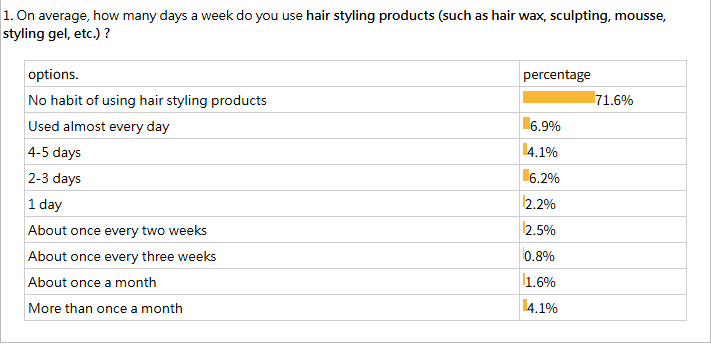
A comprehensive survey on hair styling product usage revealed that a significant 71.6% of respondents don’t have a habit of using hair styling products regularly. However, among users, 6.9% reported daily use, while 4.1% use them 4-5 days per week. Another 6.2% use hair wax 2-3 days weekly, suggesting that a dedicated user base relies on these products consistently for their grooming needs.
The same study indicated that younger male demographics, particularly those in their 30s, show a higher usage rate of hair wax compared to other age groups . This demographic represents a core target market for hair wax products.
The data also suggests that the average consumer uses approximately 8.2 beauty products regularly, with hair wax being a significant component of male grooming routines, especially among style-conscious individuals in their 20s and 30s.
Market Outlook and Growth Potential of Hair Wax.
The hair wax market shows promising growth prospects in the coming years, driven by increasing grooming consciousness and product innovations.
According to industry analysis, the global hair wax market is expected to grow at a compound annual growth rate (CAGR) from 2024 to 2030 . The market encompasses various product types, including castor wax, candelilla wax, beeswax, ozokerite, carnauba wax, emulsifying wax, and lanolin.
The market application is broadly divided into hair salons and individual use, with both segments contributing significantly to market growth. Key players in the hair wax market include established companies like Beiersdorf, Henkel, P&G, Watsons, Shiseido, TIGI, and GATSBY, indicating a competitive landscape with opportunities for innovation and specialization.
Regional analysis shows that Asia-Pacific is expected to be a promising region for hair wax market growth, driven by increasing disposable income, rising awareness of animal rights, and lifestyle changes . Meanwhile, North America and Europe currently dominate the market due to higher personal care consumption and growing concerns about animal welfare and environmental impact.
The vegan wax market, where hair wax is a significant segment, is projected to reach $1.08 billion by 2028, growing at a CAGR of 10.20% during the 2021-2028 forecast period . This indicates a shifting consumer preference toward cruel-free and plant-based alternatives in hair care products.
Hair Wax Ingredients, Functions, and Natural Innovation.
Core Components and Their Functions.
Traditional hair waxes typically contain a combination of the following ingredients:
- Wax bases (beeswax, lanolin, petroleum jelly) providing the fundamental structure and hold
- Oils and emollients (various mineral oils and synthetic compounds) offering shine and manageability
- Stiffening agents enabling sculptured hairstyles like pompadours or quiffs
What sets hair wax apart from other styling products like gels or sprays is its unique ability to give hair a shiny, slick appearance without drying it out. Additionally, hair wax lasts longer than most hair care products, often requiring several washes to completely remove.
Advancements in Natural Formulations.
Modern consumers are increasingly concerned about the potential damage from prolonged use of chemical-heavy hair waxes, which can include weakened hair strands, damaged hair roots, and even affected hair follicles leading to hair loss.
In response to these concerns, significant innovations have emerged in plant-based hair wax formulations. These advanced formulas incorporate herbal extracts and natural wax alternatives that provide styling benefits while nourishing the hair.
One notable patent (CN108066193A) demonstrates a sophisticated natural hair wax formulation containing:
- Herbal extracts: Ginseng, He Shou Wu (Polygonum multiflorum), Salvia, Sesame, Walnut, and Peppermint
- Natural wax components: Castor wax, candelilla wax, beeswax, ozokerite, carnauba wax, emulsifying wax, and lanolin
- Plant-based oils: Almond oil as a natural emollient
These natural formulations deliver dual benefits: effective styling and hair care properties that address common concerns like frizziness while improving hair brightness and overall health.
The vegan wax market has also grown significantly, utilizing waxes derived from plant sources like bark, leaves, and fruits, or obtained through dewaxing of vegetable oils . These plant-based alternatives align with the increasing consumer demand for cruel-free products that don’t compromise on performance.
Beslocosmetics OEM: Your Partner in Natural Hair Wax Manufacturing.
At Beslocosmetics, we leverage our expertise in cosmetic manufacturing and dedicated R&D capabilities to help brands create distinctive, market-ready hair wax products that align with the growing demand for natural formulations.
Our Customization Capabilities.
- Formula Development: Our engineers specialize in creating plant-based hair wax formulations enriched with beneficial herbal extracts like ginseng, He Shou Wu, and salvia, which are known to improve hair health while providing superior hold
- Flexible Production Options: We support both small-batch trials for market testing and large-scale production, allowing brands to manage inventory effectively while responding quickly to market trends
- End-to-End Services: From ingredient sourcing and formula development to compliance support and packaging design, we provide comprehensive OEM solutions that streamline product development
Commitment to Natural, Healthy Hair Care.
Understanding consumer concerns about chemical-heavy hair products, we prioritize safe, effective natural alternatives in our formulations. Our hair waxes are designed to:
- Style without damaging hair structure
- Deliver nourishing benefits through herbal extracts
- Address specific hair concerns like frizz, dullness, and weakness
- Cater to the growing vegan market with plant-based options
With two manufacturing facilities, our own laboratory, and an experienced R&D team, we have the infrastructure and expertise to bring your vision for natural, effective hair wax products to life.
Professional Insights: Salon Perspectives and Brand Strategies.
Hair Salons and Stylists.
For professional hair salons, hair wax remains an essential styling product due to its versatility and stronghold. Salons typically prefer products that:
- Offer reliable performance across different hair types
- Provide natural-looking results without residue
- Align with current styling trends while maintaining hair health
The shift toward natural and organic formulations is particularly noticeable in the salon segment, as stylists increasingly recognize the importance of maintaining hair health while achieving desired styles.
Leading Brands and Market Trends.
Major players in the hair wax market, including Beiersdorf, Henkel, P&G, and Shiseido, have been expanding their product lines to include more natural and specialized formulations.
Market research indicates that 20-30% of men in their 20s and 30s show higher usage of styling products like hair wax, with particular concern about hair loss (43% in the 20-30 age group) . This has led to increased demand for products that offer styling benefits while addressing hair health concerns.
Successful brands are focusing on:
- Clear product differentiation through specialized formulations
- Transparent ingredient sourcing and sustainability claims
- Targeted marketing toward specific consumer segments
- Combining styling benefits with hair care properties
Application Tips and Best Practices for Hair Wax.
To maximize the benefits of hair wax while maintaining hair health, we recommend the following practices:
Proper Application Techniques.
- Start with a small amount – Take a pea-sized portion and emulsify between palms before applying evenly through dry or towel-dried hair
- Focus on mid-lengths to ends – Avoid applying directly to the scalp to prevent clogging hair follicles
- Style as desired – Work through hair using fingers or a comb to achieve your preferred look
Hair Health Considerations.
- Thorough cleansing – Use a clarifying shampoo periodically to remove product buildup, as hair wax typically requires several washes to completely remove
- Scalp care – Regular scalp massage and avoidance of excessive product application near roots can help maintain follicle health
- Balanced usage – Consider giving your hair occasional breaks from styling products to maintain its natural health
Choosing the Right Product.
When selecting a hair wax, consider:
- Hair type and desired hold level
- Ingredient transparency and formulation philosophy
- Additional benefits beyond styling (conditioning, nourishing, etc.)
- Brand reputation and manufacturing standards
Ready to develop your custom hair wax line? Contact Beslocosmetics today to leverage our expertise in natural pomade manufacturing. Our R&D team is ready to help you create products that stand out in the competitive hair care market.