Beautiful and unique, easily get professional-grade DIY curly hair at home.
Get professional-grade DIY curly hair at home.
Have you ever envied someone else’s fabulous curls, but worried about damaging them with a perm or the high costs of a salon visit? Actually, achieving beautiful curls doesn’t have to be complicated! Whether you’re looking for romantic waves, playful perms, or a natural French twist, this article will provide you with a comprehensive and practical DIY curly hair guide that’s easy to achieve at home—no professional skills required.
Preparation before DIY Curly Hair: Hair Quality is the Key.
Before you start curling your hair, proper preparation can make your curls last longer and reduce damage. Hair must be completely dry before using hot tools, because high temperatures on wet hair may cause moisture to evaporate, which can damage the hair.
For damaged or dry frizzy hair, it is recommended to use anti-scald spray to protect the hair first. This will not only reduce heat damage, but also make the hair look softer, shinier and smoother.
Partitioning is the key to successful curling: Divide the hair from the ears to the top of the head into two parts, then divide the lower part into two halves. Use a duckbill clip or a small rubber band to fix the curled part to avoid mixing with the uncurled hair.
Four major categories of curling tools and their usage tips.
1 Straight Clips: Versatile Player.
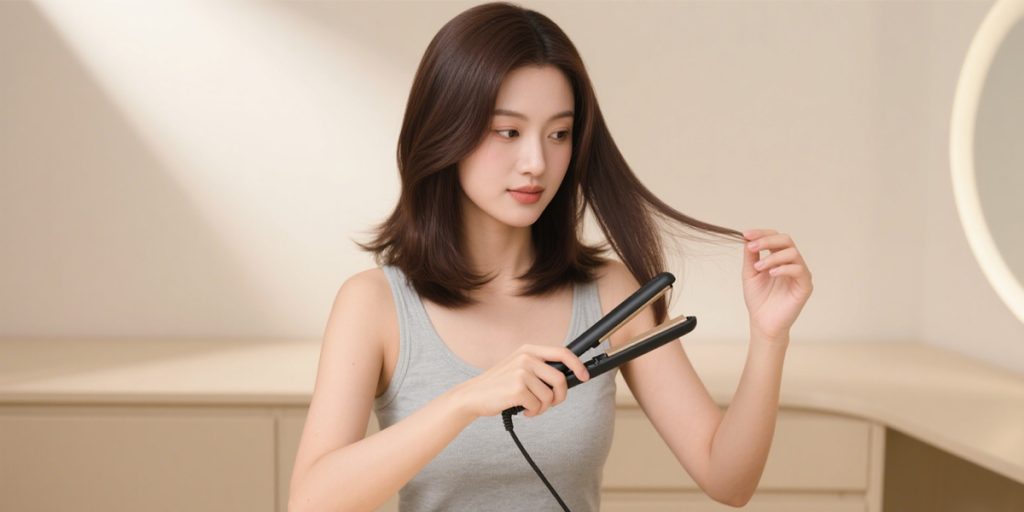
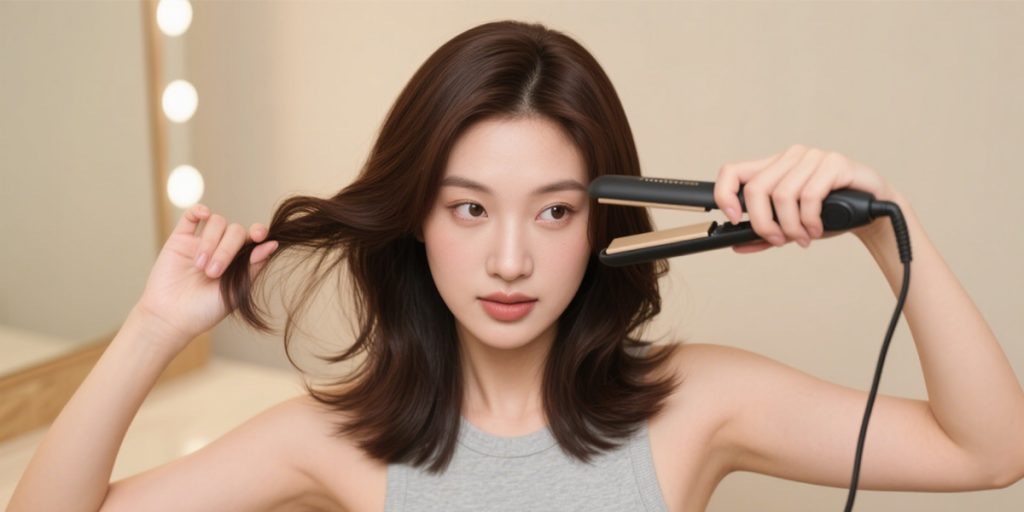
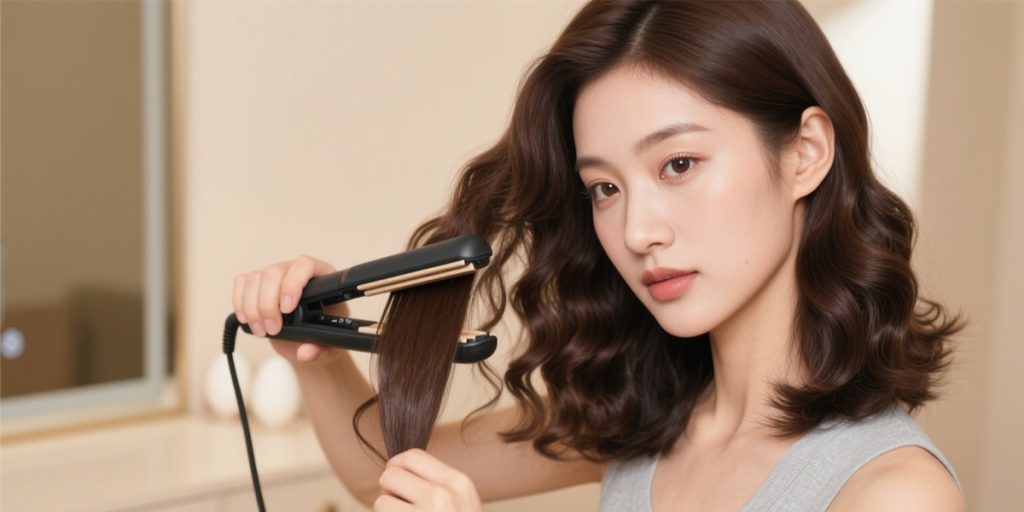
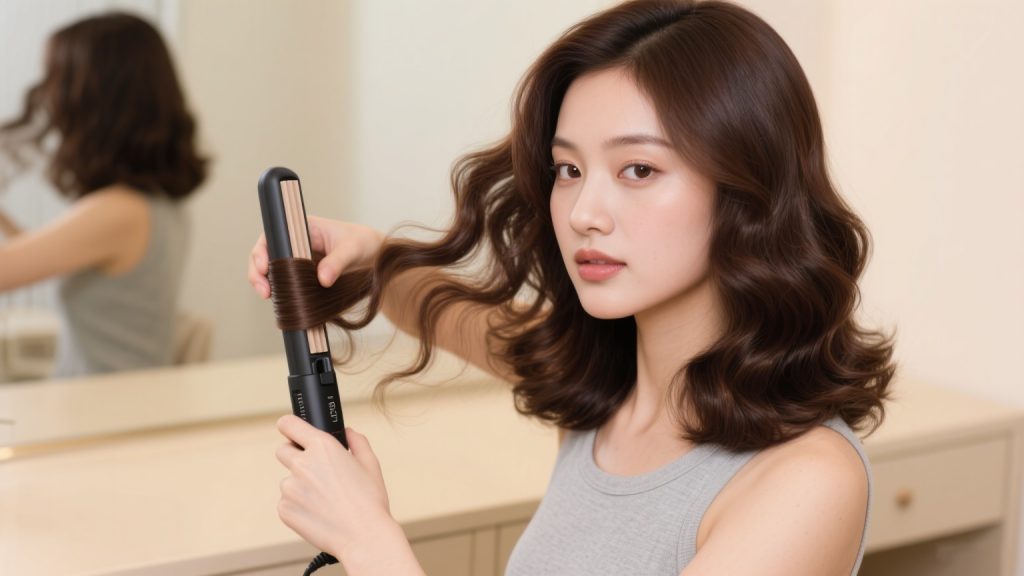
Flat irons are not only for straightening hair, they can also create a variety of curly hair styles: – Inward curl: turn the flat iron 90 degrees inward at the end of the hair – Outward curl: turn the flat iron 90 degrees outward at the end of the hair – Curly hair: lay the flat iron flat and flip it back and forth – Wavy curly hair: hold the flat iron upright, rotate it one circle and then put it down half a circle, and so on.
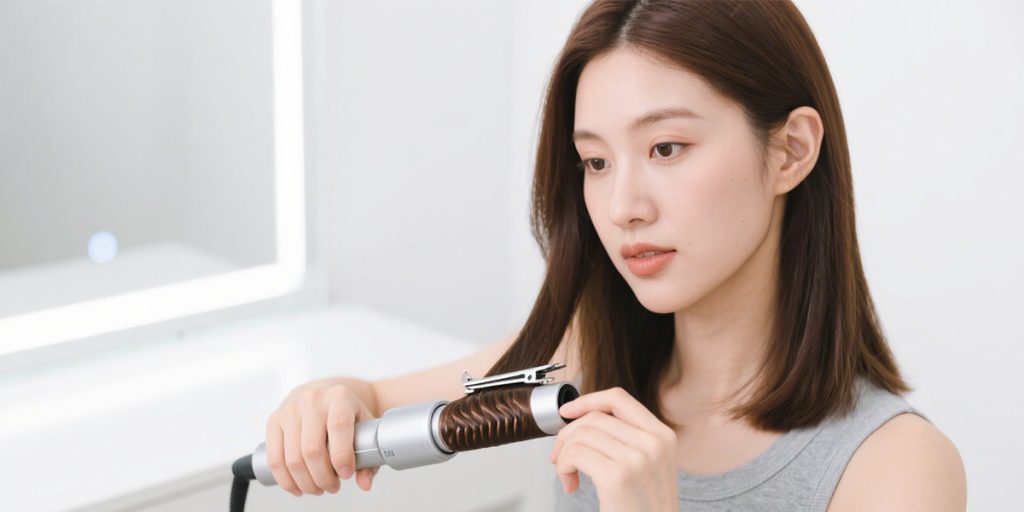
2 Cylindrical curling iron: professional-grade choice.
This curling iron is suitable for creating more professional curls:
- Horizontal curling: Place the curling iron horizontally, use the clip to hold the hair and wrap it from the root to the end to create a water ripple effect.
- Vertical curling: The curling iron is perpendicular to the ground, curling from the end of the hair to the root, which can lengthen the outline vertically and is suitable for round faces.
Important tip: Whether you hold the curling iron upright or upside down, make sure the clips are rotated toward the outside of your face to prevent the curls from making your face look bigger.
3 Curling iron: Quickly increase hair volume.
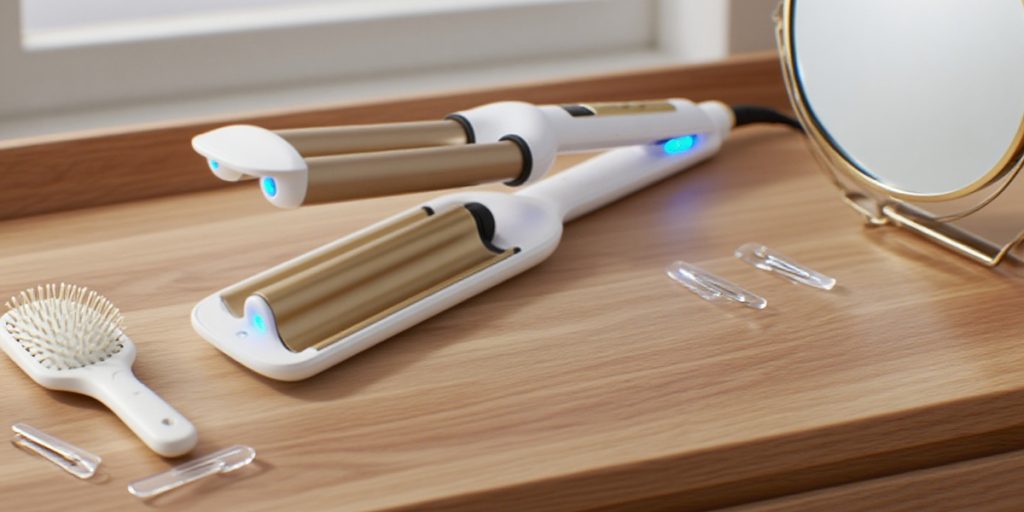
For thin or fine hair, the Egg Roll Curling Iron is a great choice. Its three-section wave plate can quickly create a retro wave style:
- Take an appropriate amount of hair each time and put it in along the clip.
- When clamping, the last layer should overlap and press the previous layer to ensure a natural connection.
- The curling iron at the root of the hair should be arched upward to avoid the top of the head collapsing.
4 Lattice clip: a great tool for high skull tops.
Want to create the popular high-top effect? The lattice clip is your best choice:
- The waffle-shaped plate creates a Morgan perm texture.
- Don’t take too many pieces at a time; layering is best.
- When clipping, try to hold the clip upright to give the hair an upward force and double the volume.
Natural DIY Curly Hair Methods Without Heat Tools.
If you’re worried about heat damage, or you’re out and about without the tools, these tips will definitely help:
1.Sleep Curl with Curling Band.
The “curling band” method that is popular in Europe and the United States recently:
- Wrap your hair around the curling band before bed, ensuring it stays close to your scalp.
- Remove it upon waking for voluminous curls.
- No heat damage, saving time and effort.
2.Creative Paper Bag/Tissue Curl Technique.
Paper Bag Curls:
- Cut a brown paper bag into strips and fold them in half.
- When your hair is partially dry, wrap the ends of the paper in a V-shape.
- Gently roll the hair upwards and tie a knot.
- Air dry or blow dry with a cool air fan, then remove.
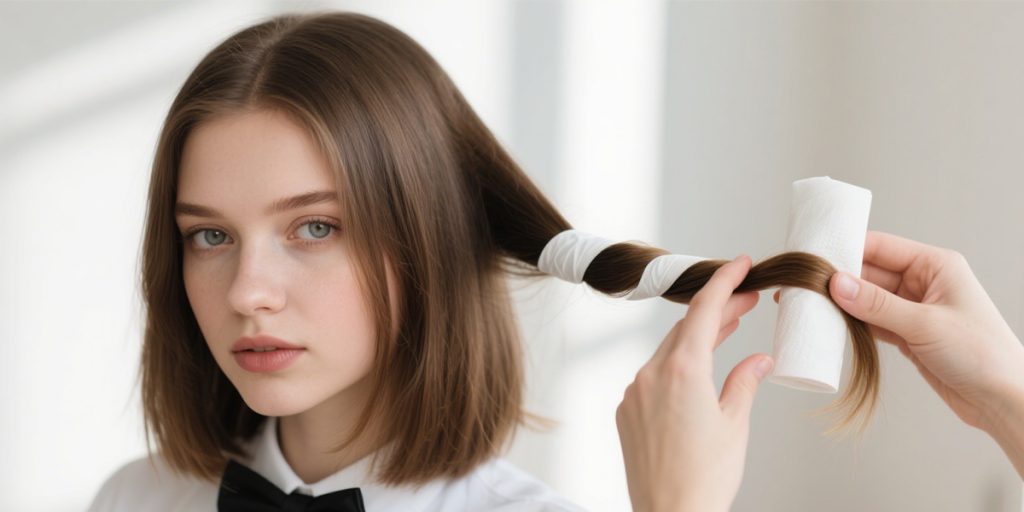
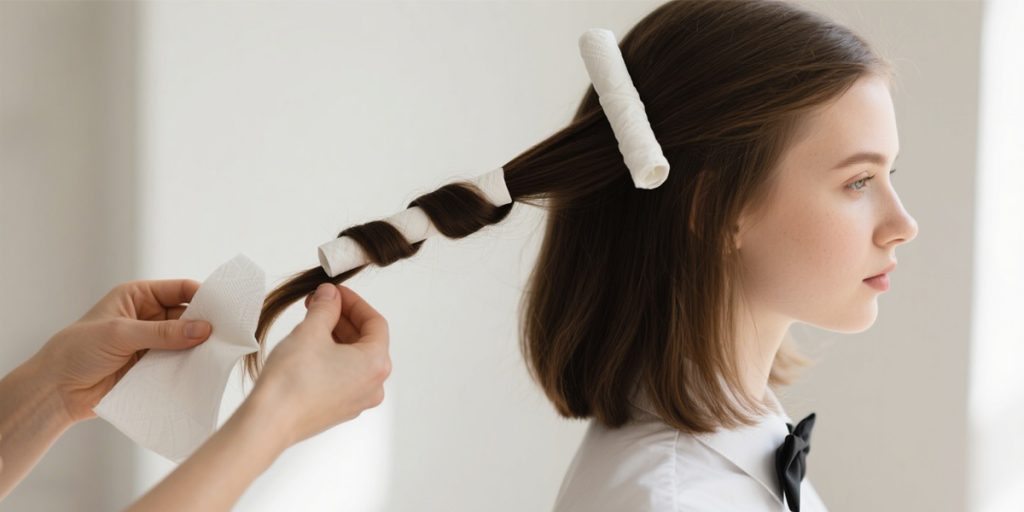
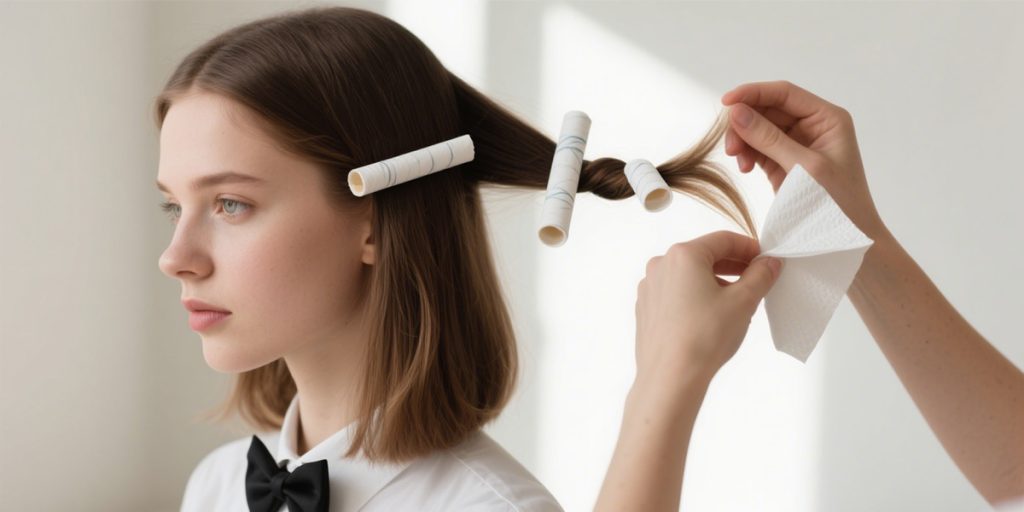
Tissue Curls:
- Roll a napkin into a stick and lightly dampen it.
- Use a bobby pin to secure the ends of your hair to the paper towel and roll it up.
- Fix it with a paper towel knot and let it dry for 1-2 hours or with a gentle breeze.
- Remove the hair to create a natural curl.
3.Sock Curl Method.
An unexpected low-cost method:
- Use a stocking to braid your hair and secure it in place.
- Remove it after waking up to achieve fairy waves.
- It won’t fall off when you turn over, no skill required.
4.Bun styling method.
Multi-ball header method:
- Divide your hair into four buns, securing them on the left, right, and top/bottom sides.
- Evenly distribute the volume, ensuring all strands are curled.
- Let it down for a mermaid-like, medium-length curl that’s incredibly flattering.
Quick Hair Dryer Curls:
- Spray a small amount of hairspray and divide your hair into two buns.
- Blow dry for 30-60 seconds each.
- Get perfect curls in 5 minutes.
5.Braid Curls.
The most traditional and natural method:
- After washing, blow-dry your hair until it’s 80% dry.
- Create a three-strand braid (the size of the braid determines the curls).
- Remove it after waking up to achieve natural curls.
- Tip: Spray some hair conditioner or oil before braiding; avoid pulling too hard when removing.
DIY Curly Hair Care and Styling.
After DIY Curly hair is completed, correct care can make the style more durable: – Proper combing: After curling, wait for 1-2 minutes to cool down, then use a wide-tooth comb, air cushion comb or fingers to gently comb out, and avoid pulling with a dense comb – Use styling products: You can use styling products for fine and soft hair, which can maintain the curls all day even in humid weather – Apply essence oil: Apply 2-3 drops of hair essence oil on the curls to improve the glossiness and curl layering.
FAQs.
What is the difference between DIY Curly Hair and perming it?
Perming hair lasts longer and saves time and effort, but there will be an awkward period; curling your own hair allows you to change the shape at will, has a high error tolerance rate, and avoids the “double damage” to those who frequently dye their hair.
How to choose the material and size of curling tools?
- Ceramic technology: Stable heat conduction, uniform heat distribution, and high cost-effectiveness.
- Negative ions: An advanced version of ceramic, protecting hair cuticles and minimizing damage.
- Aluminum: Fast heating and high temperature, long-lasting styling, but prone to burns, mostly for professional use.
- Size: 32mm is a common size. Smaller diameters create denser curls (like wool curls), and vice versa. Long hair is best suited to larger diameters, but this depends on personal preference.
Is there a big difference between expensive and affordable curling irons?
Expensive products have advantages in craftsmanship, materials and details, but technology is more important than tools. Just choose products with high cost performance within your economic affordability.
Summary of DIY Curly Hair.
DIY curly hair is a fun and practical art. With the various methods and techniques described in this article, you’ll master the secrets to achieving professional-quality curls at home. Whether using hot tools for quick styling or using heat-free, natural methods to achieve natural curls, regular practice is key to success.
Start trying DIY Curly Hair today! Start with simple methods and gradually master more complex techniques. Soon you will be able to change your charming curly hair style according to your mood, occasion and outfit.
Have you tried any of these DIY curly hair methods? Or do you have your own unique curling tips? Feel free to share your experiences and questions in the comments section!
If you want to know about OEM hair styling products, please contact Beslocosmetics Manufacturer.
Contact us to get free samples and quotes.